
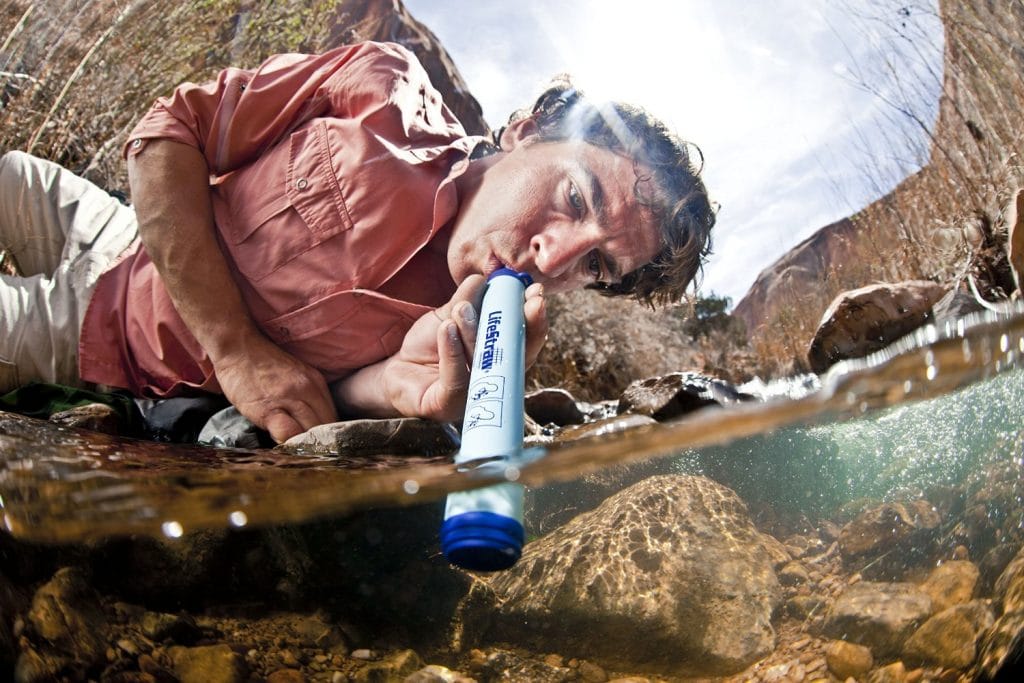
If you’ve ever hiked deep into the backcountry, set up camp beside a mountain stream, or found yourself in a survival situation without access to clean drinking water, you’ve probably thought about how to make that water safe to drink. Portable water filters have become an essential piece of gear for outdoor enthusiasts, backpackers, and emergency preppers alike — but most people have only a vague understanding of what’s actually happening inside them.
Understanding how a portable water filter works helps you choose the right one, use it more effectively, and set realistic expectations about what it can and can’t remove from your water source. For a related option worth knowing about, check out this guide to the best water purification pens — a compact alternative that uses UV light instead of physical filtration.
Key Takeaways
- Portable water filters physically remove contaminants by forcing water through a porous filtration medium
- Most filters target bacteria and protozoa but do not remove viruses without additional treatment
- Hollow fiber membrane filters are the most common and effective technology in modern portable filters
- Activated carbon is often included to improve taste, reduce odors, and remove chemical contaminants
- Filter pore size (measured in microns) determines what the filter can and cannot remove
- Water purifiers go a step further than filters by also eliminating viruses
- Regular maintenance and proper storage extend filter life and protect water quality
- No single filter type handles every contaminant — knowing your water source matters
What Is a Portable Water Filter?
A portable water filter is a compact, field-ready device designed to remove biological and sometimes chemical contaminants from untreated water sources — streams, lakes, rivers, or even collected rainwater. Unlike home water filtration systems built into plumbing, portable filters are designed to be carried in a pack, used on the trail, and operated without electricity or running water.
They work by forcing water through a filtration medium with pores small enough to physically block or trap contaminants. The result is water that is safe — or significantly safer — to drink. The specific level of protection depends on the filter type, pore size, and whether additional purification stages are included.
The Core Filtration Technologies Explained
Hollow Fiber Membrane Filters: The Modern Standard
The most widely used technology in today’s portable water filters is the hollow fiber membrane. These filters consist of thousands of tiny, straw-like tubes bundled together. Water is forced through the walls of these tubes, which are riddled with microscopic pores — typically 0.1 to 0.2 microns in diameter.
Anything larger than those pores simply cannot pass through. That includes:
- Protozoa (like Giardia and Cryptosporidium) — typically 1–10 microns
- Bacteria (like E. coli and Salmonella) — typically 0.5–5 microns
- Sediment, dirt, and particulate matter
Hollow fiber filters are durable, lightweight, and can often filter hundreds to thousands of liters before needing replacement. Many popular squeeze-style and straw-style filters use this technology.
Ceramic Filters: Time-Tested and Reliable
Ceramic filters have been used for water purification for centuries. Modern ceramic elements work on the same principle as hollow fiber membranes — physical filtration through extremely small pores — but use a rigid ceramic material instead.
Ceramic filters are:
- Highly durable and long-lasting
- Cleanable and reusable (backwashing restores flow rate)
- Effective against bacteria and protozoa
- Often used in gravity-fed base camp systems
The tradeoff is weight and fragility compared to hollow fiber alternatives, making them better suited for car camping or base camp setups than ultralight backpacking.
Activated Carbon: Improving Taste and Removing Chemicals
Physical filtration handles biological threats, but it does little for chemical contaminants, pesticides, herbicides, heavy metals, or the simple fact that water from a stagnant pond tastes terrible. That’s where activated carbon plays a critical role.
Activated carbon works through a process called adsorption — contaminant molecules bond to the enormous surface area of the carbon material rather than passing through it. One gram of activated carbon can have a surface area equivalent to several tennis courts, giving it an extraordinary capacity to trap dissolved compounds.
Activated carbon effectively reduces:
- Chlorine and chlorine byproducts
- Pesticides and herbicides
- VOCs (volatile organic compounds)
- Unpleasant tastes and odors
- Some heavy metals (depending on the carbon type)
Many portable water filters include an activated carbon stage alongside their physical membrane, giving you both biological and chemical protection in a single unit. If you’re also focused on staying hydrated during long hikes, pairing a good filter with one of the best water purification bottles for hiking and camping can give you a versatile, all-in-one solution.
Filters vs. Purifiers: An Important Distinction
This is one of the most misunderstood aspects of portable water treatment. The terms “filter” and “purifier” are often used interchangeably, but they are not the same thing.
| Feature | Water Filter | Water Purifier |
|---|---|---|
| Removes bacteria | ✅ Yes | ✅ Yes |
| Removes protozoa | ✅ Yes | ✅ Yes |
| Removes viruses | ❌ No | ✅ Yes |
| Common methods | Hollow fiber, ceramic | UV light, chemical treatment, advanced membranes |
| Best for | Backcountry in developed regions | International travel, areas with poor sanitation |
Viruses are far smaller than bacteria — typically 0.02 to 0.3 microns — meaning most physical filters cannot block them. In North American backcountry settings, viral contamination of wilderness water sources is rare, so a standard filter is usually sufficient. In developing countries or areas with significant human activity near water sources, a purifier or combined approach is strongly recommended.
Understanding Micron Ratings
Pore size is the single most important specification to understand when evaluating a portable water filter. It’s measured in microns (µm) — one micron is one millionth of a meter.
| Pore Size | What It Removes |
|---|---|
| 5–10 microns | Large sediment and particles |
| 1 micron | Most protozoa (Giardia, Cryptosporidium) |
| 0.2 microns | Most bacteria (E. coli, Salmonella) |
| 0.02 microns | Viruses (requires specialized membranes or UV) |
A filter rated at 0.1 microns or smaller will reliably remove both protozoa and bacteria. Anything larger than 0.5 microns may miss some bacterial threats. This is why pore size should be a primary factor in any purchasing decision.
How Different Filter Styles Work in Practice
Straw-Style Filters
Straw filters are the simplest and most compact option. You drink directly through the filter, which processes water in real time as you sip. They’re ultralight and ideal for emergency kits or day hikes, but they don’t allow you to filter water in advance for group use.
Squeeze Filters
Squeeze filters use a soft reservoir bag that you fill with untreated water, then squeeze through a hollow fiber cartridge into a clean container or directly into your mouth. They’re fast, versatile, and work well for solo and small-group backcountry travel.
Gravity Filters
Gravity filters use two reservoirs — one for dirty water and one for clean — connected by a filter element. Water flows through by gravity alone, requiring no pumping or squeezing. They’re ideal for base camps or group camping where you need to filter large volumes hands-free. If you’re planning a car camping setup, you might also want to explore how to keep food fresh when camping to round out your camp kitchen planning.
Pump Filters
Pump filters use a hand-operated pump to force water through the filtration element. They offer precise control over flow rate and are well-suited to filtering water from shallow sources where other styles might struggle.
Maintaining Your Portable Water Filter
Even the best filter becomes useless — or worse, counterproductive — if it’s not maintained properly.
- Backwash regularly to clear debris from hollow fiber membranes and restore flow rate
- Never let a filter freeze — ice crystals can crack the membrane and destroy its effectiveness without any visible damage
- Dry thoroughly before storage to prevent mold and bacterial growth inside the filter
- Replace filter elements according to manufacturer guidelines, even if flow rate seems acceptable
- Check for damage after any drop or rough handling, especially with ceramic elements
Conclusion
Portable water filters work by physically blocking contaminants through a porous medium — most commonly a hollow fiber membrane or ceramic element — while activated carbon stages handle chemical impurities and improve taste. The key variables are pore size, filtration technology, and whether the device qualifies as a filter or a full purifier.
For most backcountry camping in North America, a quality hollow fiber filter rated to 0.1 microns or smaller will handle the biological threats you’re likely to encounter. For international travel or high-risk water sources, step up to a purifier or combine methods for complete protection. And whatever filter you carry, maintain it properly — a neglected filter is not a safe filter.
FAQs
Does a portable water filter remove viruses?
Most standard portable water filters do not remove viruses, as their pore sizes are too large to block these microscopic pathogens. To eliminate viruses, you need a water purifier — which may use UV light, chemical treatment, or specialized membranes.
How long does a portable water filter last?
Filter lifespan varies by model and usage, but most quality hollow fiber filters are rated for 1,000 to 100,000 liters before replacement is needed. Proper backwashing and storage significantly extend their useful life.
Can I use a portable water filter with saltwater?
No — standard portable water filters are not designed to remove salt or dissolved minerals. Desalination requires a completely different technology (reverse osmosis) and is not available in most portable filter designs.
How do I know when my filter needs to be replaced?
A noticeably reduced flow rate, unusual taste or odor in filtered water, or visible damage to the filter element are all signs that replacement is due. Always follow manufacturer guidelines even if the filter seems to be working normally.
Is filtered water the same as purified water?
Not exactly. Filtered water has had particles, bacteria, and protozoa physically removed, but may still contain viruses. Purified water has been treated to eliminate viruses as well, making it safe in a broader range of contamination scenarios.
This article was last updated on March 4, 2026 .
The Outdoors Blog is reader-supported. When you buy through links on our site we may earn an affiliate commission. Learn More.