
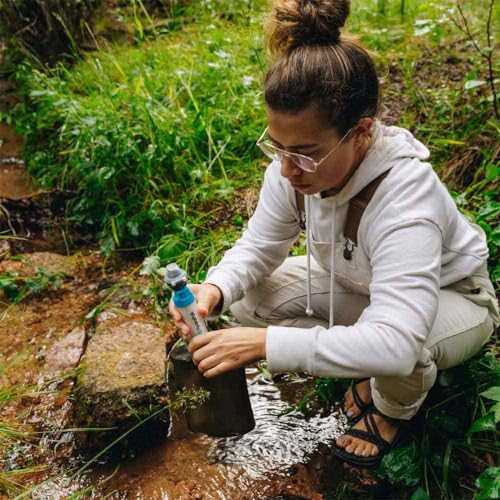
Clean drinking water is the single most critical resource on any trail, and a reliable inline water filter is one of the most practical ways to stay safe in the backcountry. Whether you are heading out for a weekend camping trip or a multi-week thru-hike, having a filter that works quickly and reliably can make a real difference. The best inline water filters remove bacteria, protozoa, and microplastics without adding significant weight to your pack.
Quick Answer: What Is the Best Inline Water Filter for Hiking?
Theyer Products Sawyer SP105 MINI is the best overall inline water filter for most hikers and backpackers. It weighs just 2 ounces, filters up to 100,000 gallons, and removes 99.99999% of bacteria and 99.9999% of protozoa. Its versatility, proven track record, and low price make it the most practical choice across a wide range of outdoor situations.
Key Takeaways
- Hollow fiber membrane filters (0.1 to 0.2 microns) are the most reliable for removing bacteria and protozoa in the field
- Weight matters on long trips; the lightest options here come in under 2.5 ounces
- Flow rate affects how long you wait for water, especially when filtering for a group
- Compatibility with standard 28mm bottle threads gives you more flexibility in the field
- Microplastic filtration is increasingly important and worth checking before you buy
- Filter lifespan varies widely; longer-rated filters offer better long-term value
Comparison Table
| Product | Best For | Weight | Key Feature | Amazon Link |
|---|---|---|---|---|
| Sawyer MINI SP105 | Best Overall | 2 oz | 100,000-gallon rating | View on Amazon |
| Sawyer Squeeze SP129 | Multi-day trips | 2 oz | Includes 2 squeeze pouches | View on Amazon |
| HydraPak 28mm Filter Kit | HydraPak users | 47g (1.7 oz) | 1L/min flow rate | View on Amazon |
| MSR Thru-Link | Reservoir users | 71g (2.5 oz) | 1.2L/min flow rate | View on Amazon |
| Puribag Adventure Bladder | All-in-one system | N/A | 2L bladder with built-in filter | View on Amazon |
The 5 Best Inline Water Filters for Hiking and Backpacking
1. Sawyer Products SP105 MINI Water Filtration System (Best Overall)
Product Overview
The Sawyer MINI is the go-to filter for solo hikers and backpackers who want a reliable, lightweight option that does not require much thought in the field. It attaches directly to standard 28mm disposable water bottles, the included squeeze pouch, or a hydration pack, giving you multiple ways to use it depending on your setup.
Pros
- Extremely lightweight at 2 ounces
- Rated to filter up to 100,000 gallons
- Removes 99.99999% of bacteria and 100% of microplastics
- Works with standard water bottles and hydration packs
- Includes cleaning plunger for backflushing
Cons
- Flow rate slows noticeably as the filter ages without regular backflushing
- The included squeeze pouch is prone to cracking with heavy use
- Not ideal for filtering large volumes quickly for a group
Key Specifications
- Filter rating: 0.1 micron absolute
- Weight: 2 oz
- Lifespan: Up to 100,000 gallons
- Includes: MINI filter, 16 oz squeeze pouch, 7-inch straw, cleaning plunger
Real-World Performance
On day hikes and weekend trips, the MINI performs without any issues. You can fill the pouch from a stream, attach the filter, and drink directly or squeeze water into another bottle. It is one of the easiest filters to use when you are tired at the end of a long day and just want clean water fast. Backflushing regularly keeps the flow rate strong throughout a long trip.
Who Should Buy It
Solo hikers, backpackers, scouts, and anyone who wants a simple and proven water filter at an affordable price point.
Who Should Avoid It
Groups needing to filter large volumes quickly, or anyone who wants a gravity-fed system without extra steps.
View the Sawyer MINI on Amazon
2. Sawyer Products SP129 Squeeze Water Filtration System (Best for Multi-Day Trips)
Product Overview
The Sawyer Squeeze builds on the same core technology as the MINI but adds more versatility for longer trips. It comes with two 32 oz squeeze pouches, inline hydration pack adapters, and a drinking straw, giving you more options for how you carry and filter water throughout the day.
Pros
- Includes two 32 oz reusable pouches for larger capacity
- Works inline, as a gravity filter, or with a straw
- Removes bacteria, protozoa, and 100% of microplastics
- Compatible with standard 28mm bottles
- Individually tested three times before shipping
Cons
- Slightly larger than the MINI, though still compact
- Pouches can develop small leaks over time with rough handling
- Gravity setup requires extra rigging without a dedicated kit
Key Specifications
- Filter rating: 0.1 micron absolute
- Weight: 2 oz (filter only)
- Includes: Filter, two 32 oz pouches, drinking straw, inline hydration pack adapters, mesh storage bag
Real-World Performance
The Squeeze works well for multi-day backpacking because the two larger pouches let you carry and filter more water between sources. The inline adapter is useful when connected to a hydration reservoir, so you can drink filtered water without stopping to squeeze. This setup is practical on longer trails where water sources are spaced further apart.
For more guidance on staying hydrated outdoors, take a look at how a portable water filter works.
Who Should Buy It
Backpackers on multi-day trips, hikers who want flexible filtration options, and anyone who prefers a slightly larger capacity than the MINI offers.
Who Should Avoid It
Ultralight hikers who want the smallest possible kit and do not need the extra pouches or adapters.
View the Sawyer Squeeze on Amazon
3. HydraPak 28mm Filter Kit (Best for HydraPak Users)
Product Overview
The HydraPak Filter Kit is designed specifically for HydraPak bottle and reservoir users who want to add filtration capability to gear they already own. At 47 grams, it is one of the lightest options in this roundup, and it delivers a strong flow rate of over 1 liter per minute.
Pros
- Extremely lightweight at 47 grams (1.7 oz)
- Fast flow rate of more than 1L per minute
- Filters 1,500 liters before replacement
- Removes 99.9999% of bacteria and 99.999% of parasitic cysts
- Removes 99.999% of microplastics per NSF 42
Cons
- Best suited for HydraPak ecosystem users; less flexible with other brands
- Lower total lifespan (1,500L) compared to Sawyer options
- Backflush adapter included, but the process is less intuitive than Sawyer’sunger system
Key Specifications
- Filter rating: Not specified (removes bacteria and cysts per EPA standards)
- Weight: 47g (1.7 oz)
- Lifespan: Approximately 1,500 liters
- Includes: Filter, cap adapter, backflush adapter
Real-World Performance
If you already use HydraPak bottles or flasks, this filter drops in cleanly and converts your existing setup into a filtration system without buying a whole new kit. The fast flow rate is noticeable compared to slower squeeze-style filters, especially when you need to fill up quickly at a stream crossing.
Who Should Buy It
HydraPak ecosystem users who want a seamless, lightweight filtration upgrade without replacing their existing water bottles or reservoirs.
Who Should Avoid It
Hikers who do not use HydraPak products, or anyone who wants a longer filter lifespan before replacement.
View the HydraPak Filter Kit on Amazon
4. MSR Thru-Link Inline Backcountry Water Filter (Best Premium Option)
Product Overview
The MSR Thru-Link is built for hikers who prioritize flow rate and reservoir compatibility above all else. With a flow rate of 1.2 liters per minute and a 0.2 micron hollow fiber membrane, it delivers fast, reliable filtration when connected directly to a hydration reservoir or water bag.
Pros
- Fast 1.2L/min flow rate
- Compatible with most hydration reservoirs
- Solid construction from a trusted outdoor brand
- Made in the USA
Cons
- Heavier than Sawyer options at 71 grams (2.5 oz)
- Lower filter lifespan at 1,000 liters compared to competitors
- Currently limited stock, so availability may be an issue
- Higher price point than Sawyer alternatives
Key Specifications
- Filter rating: 0.2 micron hollow fiber membrane
- Weight: 71g (2.5 oz)
- Dimensions: 1.6 x 7.5 inches
- Flow rate: 1.2L/min
- Lifespan: 1,000 liters
Real-World Performance
The MSR Thru-Link shines in reservoir-based hydration setups where you want consistent flow without squeezing or stopping. It is well suited to trail running, fast hiking, and any activity where drinking on the move is important. The buildR’s reputation for durability in demanding conditions holds up here.
If you are comparing this to other premium outdoor gear, the best water purification bottles for hiking and camping article covers additional options worth considering.
Who Should Buy It
Hikers and trail runners who use hydration reservoirs and want a fast, reliable inline filter from a well-known brand.
Who Should Avoid It
Budget-conscious buyers, or those who prefer squeeze-style systems over reservoir-based setups.
View the MSR Thru-Link on Amazon
5. Puribag Adventure Bladder with Filter (Best All-in-One System)
Product Overview
The Puribag Adventure Bladder takes a different approach by combining a 2-liter hydration bladder with a built-in 0.1 micron hollow fiber membrane filter. Instead of adding a filter to your existing setup, this replaces your standard water bladder with one that already handles filtration.
Pros
- Combines hydration storage and filtration in one unit
- Compatible with most hydration backpacks as a replacement bladder
- 0.1 micron filter removes 99.99% of bacteria, protozoa, and parasites
- Simplifies your kit by eliminating a separate filter component
- Can be used with or without the filter depending on water source
Cons
- Heavier and bulkier than a standalone inline filter
- Filter replacement process is less established than Sawyer or MSR
- Less flexibility for using it outside of a backpack setup
Key Specifications
- Capacity: 2 liters
- Filter rating: 0.1 micron hollow fiber membrane
- Compatibility: Puribag Adventure Pack and most standard hydration backpacks
Real-World Performance
The Puribag works well for day hikers and bikers who want a clean, simple setup without carrying extra gear. Swapping it into an existing hydration pack takes only a few minutes, and the ability to use it with or without the filter gives you flexibility depending on whether you are drawing from a treated source or a natural water source. It is a practical choice for anyone who finds managing a separate filter fiddly on the trail.
Who Should Buy It
Hikers and cyclists who already own a hydration backpack and want to upgrade to a system with built-in filtration without overhauling their kit.
Who Should Avoid It
Ultralight backpackers who want the smallest and lightest possible filtration solution, or anyone who needs a filter compatible with multiple bottle types.
View the Puribag Adventure Bladder on Amazon
How to Choose the Best Inline Water Filter
Choosing the right filter depends on how you hike, how long you are out, and what kind of water sources you expect to encounter. Here are the key factors to weigh:
- Weight: For backpacking and thru-hiking, every ounce counts. Filters in this category range from 47 grams to 71 grams, which is a meaningful difference over a long trip.
- Flow rate: Faster flow rates (1L/min or more) reduce waiting time, especially when filtering for two or more people.
- Filter lifespan: A higher gallon or liter rating means fewer replacements over time, which lowers long-term cost.
- Compatibility: Check whether the filter works with your existing bottles, pouches, or reservoir. Mismatched threading is a common frustration in the field.
- Filtration level: Most filters here use 0.1 or 0.2 micron membranes. Both are effective against bacteria and protozoa, though 0.1 micron offers a slightly finer filter.
- Microplastic removal: Increasingly relevant for water sources near developed areas. Check the product specs before assuming coverage.
- Ease of maintenance: Backflushing extends filter life significantly. Filters that include a cleaning plunger or backflush adapter are easier to maintain on trail.
If you are new to water filtration, the guide on how a portable water filter works is a helpful starting point before making a purchase. Mistakes Buyers Make
- Ignoring flow rate: A filter with a very slow flow rate becomes frustrating when you are thirsty and tired at the end of a long day.
- Forgetting to backflush: Skipping regular backflushing causes flow rate to drop dramatically, which many hikers mistake for a failing filter.
- Buying for one trip and not considering longevity: A filter rated for 1,000 liters may seem like plenty, but heavy users will reach that limit faster than expected.
- Assuming all filters remove viruses: None of the filters in this article remove viruses. If you are traveling internationally or in areas with high contamination risk, you may need a purifier or chemical treatment in addition to a filter.
- Overlooking compatibility: Buying a filter that does not fit your existing bottles or reservoir creates problems on trail with no easy fix.
Best Overall, Budget, and Premium Picks
Best Overall: Sawyer MINI SP105. Lightweight, long-lasting, and proven across thousands of trips, it is the most practical choice for the widest range of hikers.
Best Budget Option: Sawyer MINI SP105 also wins here given its low price point and exceptional lifespan rating, making it outstanding value for money compared to anything else in this category.
Best Premium Option: MSR Thru-Link. For hikers who prioritize fast flow, reservoir compatibility, and brand reliability, the MSR Thru-Link justifies its higher price with solid construction and a fast filtration rate.
Conclusion
For most hikers and backpackers, the Sawyer MINI is the clear starting point. It is affordable, lightweight, and backed by a filter lifespan that most people will never exhaust. If you want more capacity for longer trips, the Sawyer Squeeze adds flexibility without much extra weight. And if you are a reservoir user who wants fast flow and premium build quality, the MSR Thru-Link is worth the investment.
For gear comparisons that help you make smarter decisions on the trail, browse the best camping gear guides on The Outdoors Blog.
FAQs
What does an inline water filter remove?
Most inline filters using hollow fiber membranes remove bacteria, protozoa, parasitic cysts, and microplastics. They do not remove viruses, dissolved chemicals, or heavy metals, so additional treatment may be needed in high-risk areas.
How long do inline water filters last?
Filter lifespan varies by product. The Sawyer MINI is rated to 100,000 gallons, while the MSR Thru-Link is rated to 1,000 liters. Regular backflushing and proper storage extend the usable life of any hollow fiber filter.
Can you use an inline water filter with any water bottle?
Most inline filters are compatible with standard 28mm threaded bottles, which covers the majority of common water bottles. Some like the HydraPak kit, are designed specifically for a particular brand’s bottles and reservoirs.
Do inline water filters work in?
Hollow fiber membranes can be permanently damaged if they freeze while wet. Always dry your filter thoroughly before storing it in freezing temperatures, or keep it close to your body overnight in cold conditions.
Is an inline filter or a purifier better for international travel?
A purifier is generally the safer choice for international travel because it removes viruses in addition to bacteria and protozoa. Standard inline filters like those reviewed here do not filter viruses, which are more prevalent in heavily populated regions outside the US.
This article was last updated on June 17, 2026 .
The Outdoors Blog is reader-supported. When you buy through links on our site we may earn an affiliate commission. Learn More.