
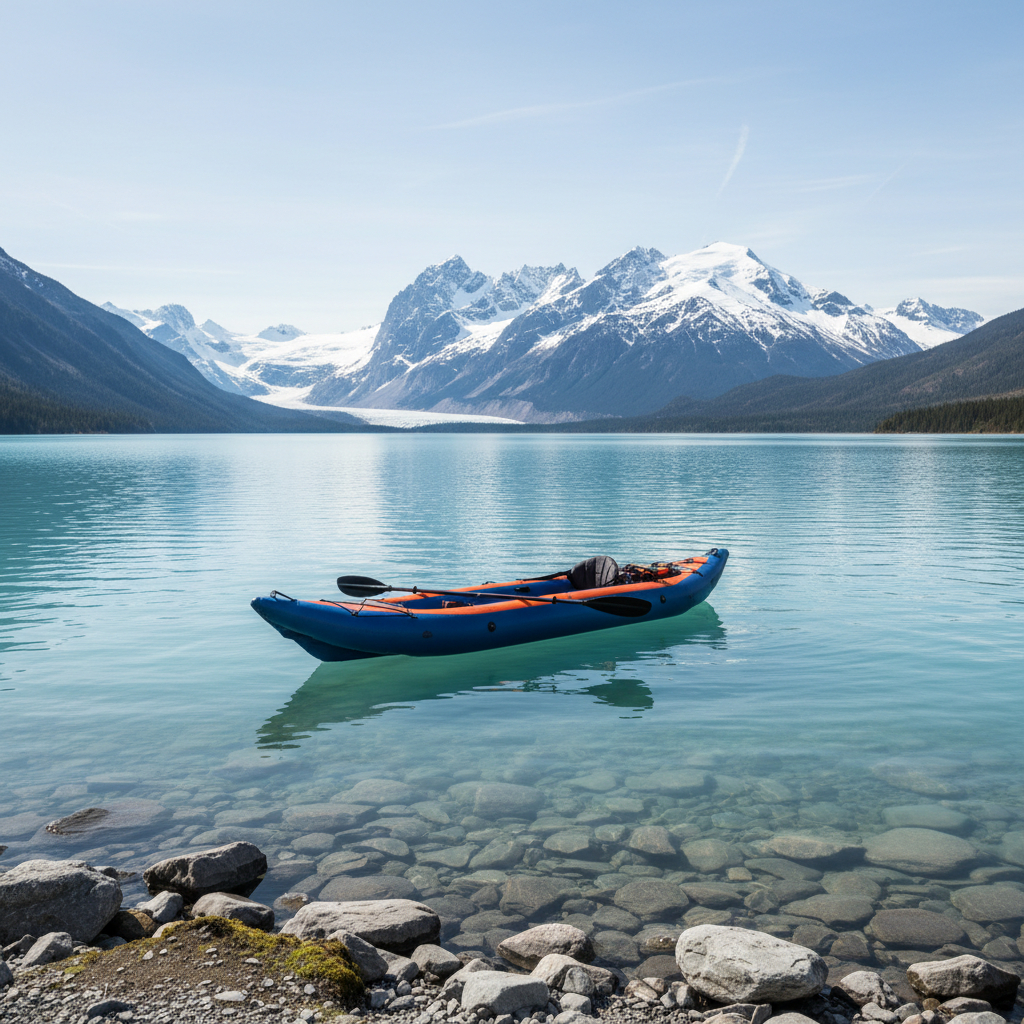
If you’re exploring options for a kayak gonflable 1 place (single-person inflatable kayak), you’re looking at one of the most practical and accessible ways to get on the water. These compact, solo inflatable kayaks are designed for individual paddlers who want portability, ease of storage, and solid on-water performance without the cost or complexity of a hardshell boat.
Single-person inflatable kayaks have grown significantly in quality over the past decade. Modern versions use multi-layer drop-stitch or PVC construction, making them far more rigid and responsive than older designs. Whether you’re paddling calm lakes, slow rivers, or light coastal waters, a good one-person inflatable kayak can handle the job.
For a well-reviewed option in this category, the Intex Explorer K2 Kayak is a widely available starting point worth considering.
Quick Answer
A kayak gonflable 1 place is a single-person inflatable kayak that can be inflated, used on the water, and then deflated and packed into a carry bag. These kayaks are lightweight, affordable, and easy to store, making them ideal for solo paddlers who lack space for a traditional hardshell kayak.
Key Takeaways
- A kayak gonflable 1 place refers specifically to a one-person inflatable kayak
- Most models weigh between 20 and 35 lbs and pack into a backpack-sized bag
- They are best suited for calm to moderate water conditions
- Inflation typically takes 5 to 15 minutes with a manual or electric pump
- Build quality varies significantly between budget and mid-range models
- Proper inflation pressure is critical for performance and safety
What Is a Kayak Gonflable 1 Place?
A kayak gonflable 1 place is a French-language term that translates directly to “1-person inflatable kayak.” It refers to any inflatable kayak designed to be paddled by a single person. The term is widely used in French-speaking markets, but the product itself is globally available and follows the same design principles regardless of where it’s sold.
These kayaks typically consist of multiple air chambers, a cockpit area for the paddler, and integrated seating. When deflated, they fold down to a fraction of their on-water size, making them easy to transport in a car trunk or check as airline luggage.
How Does a Single-Person Inflatable Kayak Work?
Inflatable kayaks use pressurized air chambers to create a rigid, buoyant hull. Most single-person models have two to three separate chambers, which adds a safety margin: if one chamber is punctured, the others keep the kayak afloat.
The chambers are inflated using a hand pump, foot pump, or electric pump. Most manufacturers recommend a specific PSI range, typically between 1.5 and 3 PSI for standard PVC models, though high-pressure drop-stitch floors can require up to 10 PSI for maximum rigidity. For a deeper look at the inflation process, the guide on tips for inflating your kayak covers this in practical detail.
Who Should Use a One-Person Inflatable Kayak?
These kayaks are best suited for:
- Beginners who want a low-cost entry point into paddling
- Urban paddlers without space to store a hardshell kayak
- Travelers who want to paddle while on vacation
- Hikers and backpackers who need packable gear
They are not ideal for whitewater kayaking above Class II, open ocean paddling, or situations where maximum speed and tracking precision are required.
Key Features to Look For
Hull Construction
Look for reinforced PVC or Hypalon material with welded seams rather than glued ones. Welded seams hold up better under pressure and resist delamination over time. High-end models often use drop-stitch construction in the floor, which dramatically improves rigidity.
Weight Capacity
Most solo inflatable kayaks support between 200 and 400 lbs. Make sure to account for your body weight plus any gear, water, and accessories you plan to bring.
Seat Quality
A well-padded, adjustable seat with back support makes a significant difference on longer paddles. Budget models often include basic inflatable seats that offer minimal lumbar support.
Tracking and Skeg
Many inflatable kayaks include a removable skeg (a fin mounted underneath the hull) that helps the kayak track in a straight line. Without a skeg, inflatable kayaks tend to drift off course, especially in wind. Learning how to use a kayak skeg can noticeably improve your paddling efficiency.
Kayak Gonflable 1 Place: Compared to Popular Competitors
When choosing a single-person inflatable kayak, it helps to understand how the most popular models compare to each other. Here is a comparison of three widely available options:
The Intex Explorer K2 is one of the most recognized entry-level inflatable kayaks. Compared to the Sea Eagle SE330, it is more affordable but offers less rigidity and tracking performance. The Advanced Elements AdvancedFrame sits at a higher price point than both, but it uses aluminum rib framing to mimic the shape of a hardshell kayak, offering significantly better performance in open water.
| Feature | Intex Explorer K2 | Sea Eagle SE330 | Advanced Elements AdvancedFrame |
|---|---|---|---|
| Weight Capacity | 400 lbs | 500 lbs | 300 lbs |
| Packaged Weight | 30 lbs | 26 lbs | 36 lbs |
| Chambers | 3 | 3 | 3 |
| Skeg Included | Yes | Yes | Yes |
| Best For | Beginners | Intermediate | Intermediate/Advanced |
| Price Range | $ | $$ | $$$ |
The Intex Explorer K2 vs. Sea Eagle SE330 comparison often comes down to budget vs. durability. The Sea Eagle uses thicker material and holds up better with regular use. The AdvancedFrame vs. standard PVC models comparison highlights the value of structural framing for paddlers who want hardshell-like handling.
If you want to explore more options across this category, the roundup of the best one-person inflatable kayaks covers a wider range of models with detailed breakdowns.
What Paddle Should You Use?
Paddle length matters more than most beginners realize. For a single-person inflatable kayak, which tends to be wider than hardshell models, a slightly longer paddle is usually more comfortable. A general rule is to choose a paddle between 220 cm and 240 cm depending on your height and the kayak’s width. For guidance on sizing, the article on correct paddle length for a kayak provides a clear breakdown.
What to Wear
Dressing appropriately for inflatable kayaking is important, especially in cooler water temperatures. The general principle is to dress for the water temperature, not the air temperature. A wetsuit or drysuit may be necessary in cold conditions even if the weather feels warm. For a full breakdown, the guide on what to wear when kayaking covers layering, footwear, and safety gear in detail.
Conclusion
A kayak gonflable 1 place is a practical, accessible option for solo paddlers who prioritize portability and convenience. While they won’t match the speed or precision of a hardshell kayak, modern inflatable designs offer genuine performance for calm and moderate water conditions. Understanding construction quality, inflation requirements, and proper accessories makes a meaningful difference in the experience.
Whether you’re a first-time paddler or an experienced kayaker looking for a packable backup, a well-chosen single-person inflatable kayak delivers solid value on the water.
FAQs
What does “kayak gonflable 1 place” mean in English?
It is a French term that translates to “1-person inflatable kayak.” It refers to any inflatable kayak designed for a single paddler that can be deflated and stored in a compact bag when not in use.
How long does it take to inflate a single-person inflatable kayak?
Most single-person inflatable kayaks take between 5 and 15 minutes to inflate using a manual pump. An electric pump can reduce that time to under 5 minutes depending on the model.
Are inflatable kayaks safe for beginners?
Yes, inflatable kayaks are generally safe for beginners on calm water. Their wide, stable hulls make them easier to balance than many hardshell kayaks, and multiple air chambers provide a safety margin if one is punctured.
Can a one-person inflatable kayak be used in the ocean?
Some models are suitable for calm coastal paddling, but most entry-level inflatable kayaks are designed for lakes and slow rivers. Open ocean paddling introduces risks from wind, currents, and waves that require more advanced equipment and experience.
How do you store an inflatable kayak long-term?
Store it deflated, clean, and completely dry in a cool, shaded location away from direct sunlight and sharp objects. UV exposure and moisture are the two main causes of material degradation over time.
This article was last updated on September 29, 2026 .
The Outdoors Blog is reader-supported. When you buy through links on our site we may earn an affiliate commission. Learn More.