
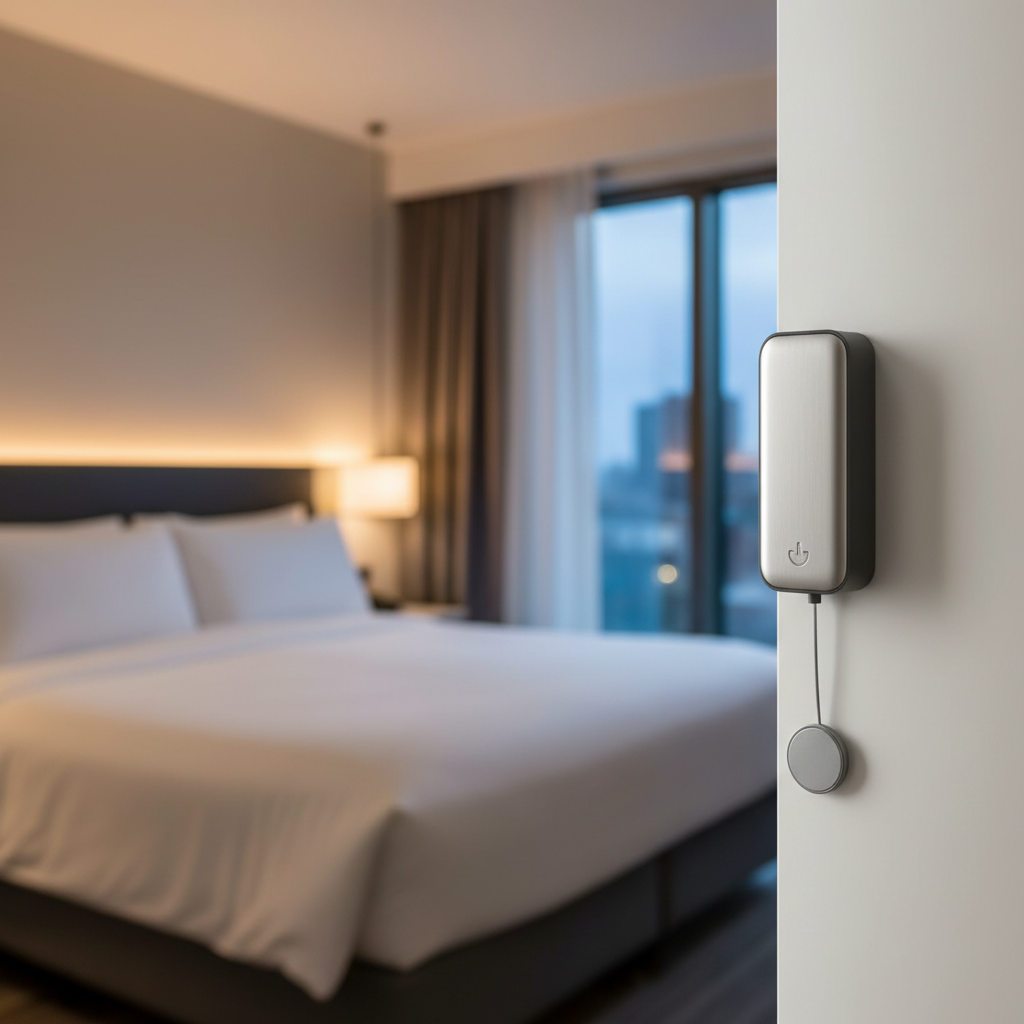
When staying in hotels, rental properties, or unfamiliar accommodations, personal security becomes a real concern. A travel door alarm is a compact, portable device designed to alert you if a door is disturbed while you’re inside. It adds an extra layer of protection beyond the standard lock already on the door.
These devices are lightweight, inexpensive, and easy to use, making them popular among solo travelers, business travelers, and families alike. They don’t replace hotel security systems, but they do give you an immediate, audible warning if someone attempts to enter your room without permission.
Quick Answer
A travel door alarm is a small, portable device that emits a loud alert when a door is opened or forced. It typically hangs over the door handle or wedges under the door, triggering an alarm if the door moves. Most models produce 100 to 120 decibels of sound, enough to wake a sleeping person and deter an intruder.
Key Takeaways
- Travel door alarms are portable security devices that alert you when a door is opened unexpectedly
- Most models use either a hanging hook mechanism or a wedge design that sits under the door
- Sound output typically ranges from 100 to 120 decibels, which is loud enough to startle and deter intruders
- They are battery-powered and require no installation or tools
- Travel door alarms work in hotel rooms, Airbnbs, dorm rooms, and even on sliding doors
- They are not a substitute for proper locks but serve as an effective supplemental security layer
How Does a Travel Door Alarm Work?
Travel door alarms use a simple but effective mechanism. When the door moves, a sensor or physical trigger activates a built-in siren. There are two primary designs: the door handle alarm and the door stop alarm.
A door handle alarm hangs over the interior handle. If the door is pushed or pulled open from the outside, the device detects the motion and sounds the alarm. A door stop alarm, sometimes called a door wedge alarm, is placed on the floor at the base of the door. If someone pushes the door inward, the wedge engages a pressure sensor that triggers the siren.
Both designs are activated and deactivated manually, usually with a simple on/off switch or a pin. Most run on standard AAA or AA batteries and require no setup beyond placing the device correctly.
Who Should Use a Travel Door Alarm?
Travel door alarms are useful for a wide range of people and situations.
- Solo travelers, especially women traveling alone, who want an added sense of security in unfamiliar places
- Business travelers staying in budget hotels where door lock quality may vary
- Families who want to prevent youngering out of a hotel room at night
- Backpackers staying in hostels or shared accommodations with limited privacy
- Elderly travelers who may feel vulnerable in unfamiliar environments
They are also worth considering for anyone staying in vacation rentals, where the security infrastructure may be less reliable than a major hotel chain.
Types of Travel Door Alarms
Door Handle Alarms
These hang directly over the interior door handle. They are simple to and work on most standard door handle styles. When the handle is turned or the door is pushed, the alarm sounds. Some models also include a built-in motion sensor for added sensitivity.
Door Wedge Alarms
These are placed at the base of the door on the floor. They physically block the door from opening while simultaneously triggering an alarm if pressure is applied. This dual function makes them a popular choice because they both resist entry and alert you at the same time.
Portable Door Locks
While not technically alarms, portable door locks are often used alongside travel door alarms. They physically reinforce the door and prevent it from being opened even if the lock is bypassed.
What to Look for in a Travel Door Alarm
When evaluating a travel door alarm, consider these key factors:
- Decibel level: Look for at least 100 dB to ensure the alarm is loud enough to be effective
- Battery type: Standard batteries are easier to replace while traveling than specialty batteries
- Size and weight: The best models are small enough to fit in a jacket pocket or toiletry bag
- Ease of use: It should be simple to arm and disarm, especially in a groggy, half-awake state
- Compatibility: Check whether it works on the door types you’ll encounter most often
Common Misconceptions About Travel Door Alarms
They don’t replace door locks. A travel door alarm is a supplemental tool, not a primary security solution. It works best when combined with the existing lock on your door.
Louder isn’t always better. While high decibel levels are important, a device that accidentally triggers due to vibrations or air pressure changes becomes more of a nuisance than a safety tool. Look for models with adjustable sensitivity.
They aren’t just for hotels. Many travelers overlook how useful these devices are in Airbnb properties, vacation rentals, and even college dormitories.
Conclusion
A travel door alarm is one of the simplest and most affordable ways to improve your personal security while away from home. Whether you’re a frequent business traveler or an occasional vacationer, having one in your bag takes up almost no space and can provide genuine peace of mind. Understanding how these devices work and which type fits your travel style helps you make a practical, informed choice before your next trip.
For travelers who spend time outdoors between stays, it’s also worth thinking about security and comfort in other contexts. Articles like What to Wear When Camping and guides on the best tents for dog owners offer practical advice for those who blend outdoor adventures with travel.
Frequently Asked Questions
Are travel door alarms allowed in hotels?
Yes, travel door alarms are permitted in hotels. They are placed on the interior of the door and do not cause any damage to the property, so there are no restrictions on using them.
How loud is a travel door alarm?
Most travel door alarms produce between 100 and 120 decibels of sound. For reference, 100 dB is roughly equivalent to a motorcycle engine at close range, which is more than enough to wake a sleeping person.
Can a travel door alarm work on sliding doors?
Some models are specifically designed for sliding doors and include a sensor that clips onto the door track. Always check the product specifications to confirm compatibility before purchasing.
Do travel door alarms work without Wi-Fi or a smartphone?
Yes, travel door alarms are entirely standalone devices. They do not require Wi-Fi, Bluetooth, or a smartphone app to function. They operate independently using battery power.
How long do the batteries last in a travel door alarm?
Battery life varies by model, but most travel door alarms last several months on a single set of batteries under normal standby conditions. It’s a good habit to replace batteries before a long trip.
This article was last updated on April 22, 2026 .
The Outdoors Blog is reader-supported. When you buy through links on our site we may earn an affiliate commission. Learn More.